Rivian CEO Calls Tesla’s 50% Market Grip ‘Unhealthy,’ Unveils AI Roadmap

Planck
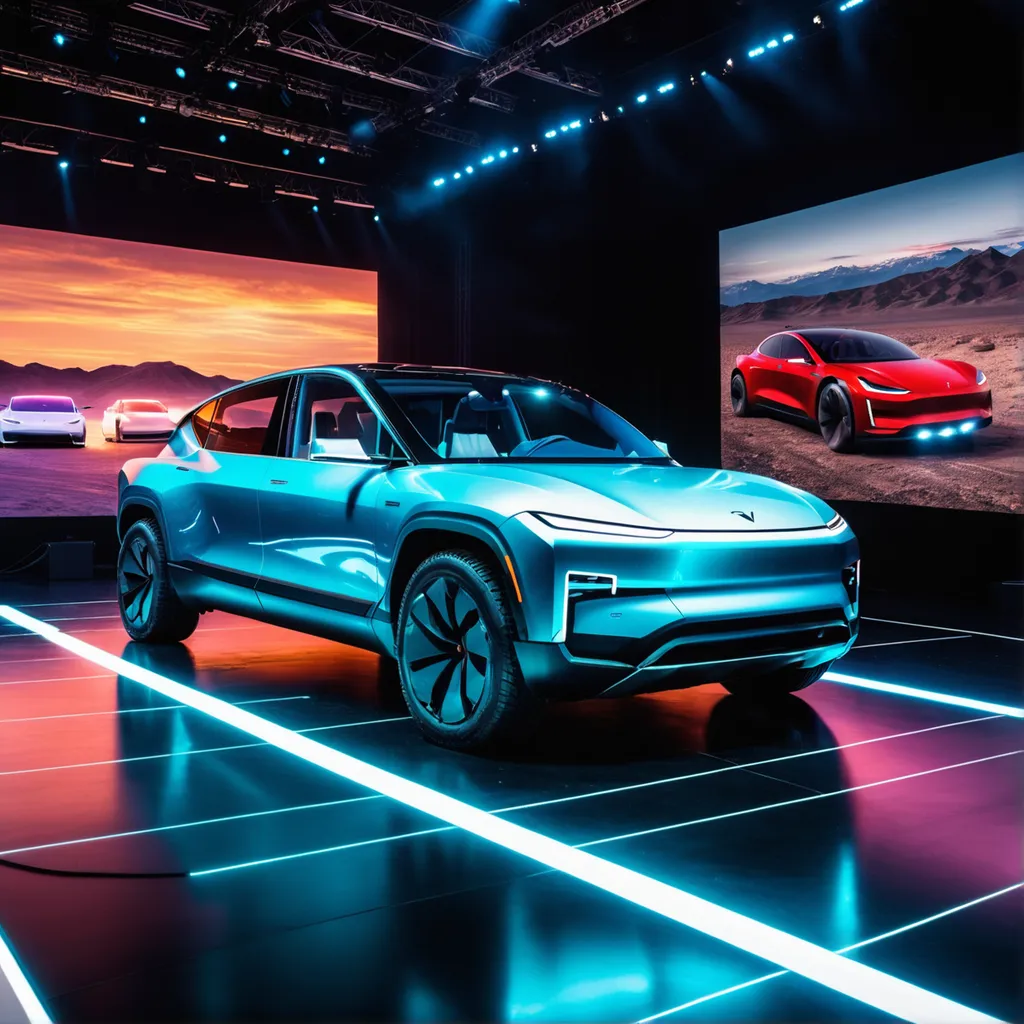
- Rivian CEO RJ Scaringe criticized Tesla's dominance, calling its 50% EV market share “unhealthy for growth.”
- Rivian showcased next-gen AI autonomy systems, advanced in-house chips, and its roadmap for Level 4 automation.
During a technological showcase on December 11, 2025, Rivian CEO RJ Scaringe called Tesla’s 50% market share in the U.S. electric vehicle (EV) market “unhealthy for growth.” At the event, Rivian also unveiled several cutting-edge advancements, including AI-powered autonomy systems, proprietary in-house chip technologies, and a roadmap toward achieving Level 4 automation. This move signals the company's bid to challenge Tesla and reshape the EV industry.
On December 21, *Cryptopolitan* reported that Scaringe outlined Rivian’s strategy to enhance competition through vertical integration. During the showcase, the CEO revealed Rivian’s plan to develop critical technologies in-house, emphasizing that this approach boosts efficiency, innovation, and independence from external suppliers. The strategy supports Rivian’s long-term ambitions to disrupt the status quo in the EV market.
A key highlight of the event was Rivian’s new Gen 3 platform, which features an advanced chip developed in partnership with global semiconductor leader TSMC. This chip processes data at an impressive 5 billion pixels per second, underscoring Rivian’s push to establish itself as a tech-driven innovator. Scaringe noted that these developments position Rivian as a direct competitor to Tesla, bringing fresh energy and innovation to the market to challenge Tesla’s dominance.
Rivian also shared its autonomy roadmap, aiming to release a "point-to-point" supervised driving system by 2026. This will be followed by an "eyes-off" feature that allows passengers to disengage completely. Its ultimate vision is personal Level 4 autonomy, where EVs can execute complex, end-to-end tasks like school pick-ups or airport shuttle services with no human input.
Although Rivian’s and Tesla’s autonomy systems both rely on foundational elements like neural networks and end-to-end training, Rivian diverges in its execution. Unlike Tesla’s camera-only setup, Rivian employs a hybrid sensor suite that combines radar, lidar, and cameras, offering a uniquely robust approach to autonomous driving.
Scaringe’s comments reflected Rivian’s mission to invigorate competition and advance EV innovation while presenting a strong case for diversification within the industry. With its vertically integrated model and focus on technological independence, Rivian aims to challenge industry norms and redefine expectations in the fast-evolving EV market.
Get the latest news in your inbox!
