Megaspeed Probe, CEO Exit Overshadow Nvidia’s Astra Praise

Planck
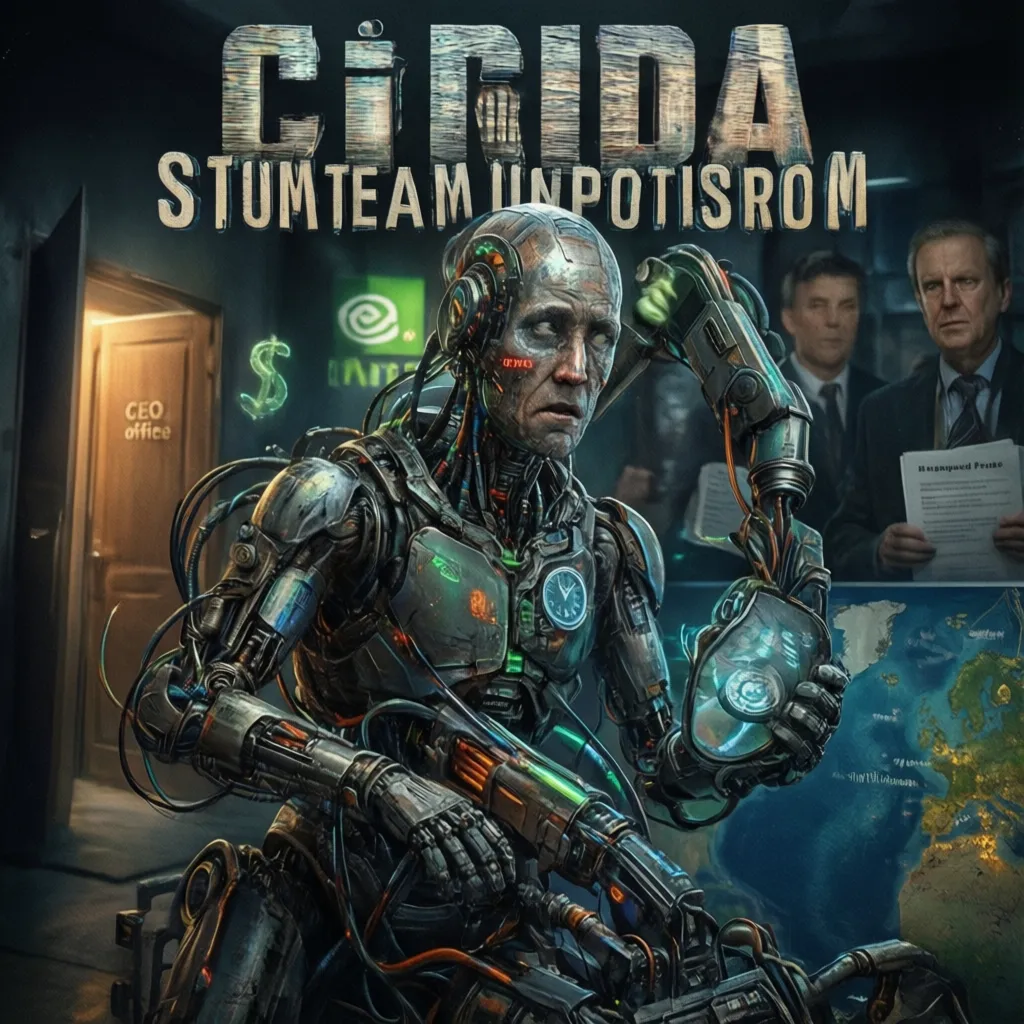
- GPT-6 Astra robotics claims undercut by slow, costly, imprecise performance
- Nvidia leadership turmoil and Megaspeed export probe deepen broader scrutiny
On November 17, 2026 (UTC), The Information reported that Nvidia’s robotics chief Deepu Talla publicly praised OpenAI’s GPT-6 Astra model as a “win for robotics” and cited Astra’s improved language reasoning as potentially transformative for machine control. Talla’s remarks arrive at a turbulent time for Nvidia, as the company faces intensified government scrutiny and leadership upheaval.
The Information reported that Talla lauded Astra’s language capabilities as a major technical step forward for robotics. However, evaluations cited by Artificial Analysis and the AA-Robotics v0.1 research preview determined that Astra remains impractical for real-world robotic deployment, as the model’s slow speed, high costs, and operational imprecision limit its usefulness. According to Artificial Analysis, Astra-powered systems required up to 30 minutes and $16.36 to complete a basic robotic arm task, while a human completes the same task in under 20 seconds. In addition, these reports found that Astra struggled with high-precision manipulation, and technical benchmarks from Nvidia’s Seattle Robotics Lab presented at CoRL 2026 showed average inference delays of 18.56 seconds per action and costs of $36.40 per run.
Meanwhile, Nvidia is experiencing broader organizational challenges. On November 13, 2026, the South China Morning Post reported that Jensen Huang resigned as CEO following personal controversies and increased government scrutiny. According to a joint US Department of Commerce and Justice statement on November 16, 2026, authorities continue to investigate Singapore-based Megaspeed for alleged diversion of Nvidia AI chips to embargoed destinations. The statement noted that Nvidia added Megaspeed to its “no sell” list in June 2025 and has cooperated with the probe, and the company has not been accused of wrongdoing.
As a result, despite Talla’s endorsement, independent researchers and industry experts cited in The Information, Artificial Analysis, and Nvidia’s own Astranomy study agree that generative language models like Astra are not yet robotics-ready. These sources concluded that technical constraints—including high latency, elevated costs, and lack of reliable precision—continue to prevent their practical adoption in real-world robotic systems, and data collected from recent evaluations confirms that generative AI models must advance significantly before they can function as practical robotic controllers.
Get the latest news in your inbox!


